Title

Coskun Uses ‘Diet-on-a-Chip’ to Study Food’s Influence on Sjögren’s Disease Patients’ Symptoms

Subhead
Ahmet Coskun’s “diet-on-a-chip” research could help replace dietary guesswork with more precise nutrition guidance for people with Sjögren’s disease.
ID
Oct 26, 2026 | By Benjamin Hosking
News Image
Photo of Dr. Ahmet Coskun and his lab research student hold the "diet-on-a-chip" device.
Image Caption
Dr. Ahmet Coskun (r), Bernie Marcus Associate Professor in the Wallace H. Coulter Department of Biomedical Engineering at Georgia Tech and Emory University, stands with his graduate research student as they showcase the 'diet-on-a-chip' device to conduct research for Sjögren’s Foundation. (Photo courtesy of Ahmet Coskun)
Widgets
Sjögren’s disease is a systemic autoimmune disorder that affects the entire body. Its main symptoms are debilitating oral and ocular dryness due to a lack of saliva and tear production. 


Without an FDA-approved drug to help salivary gland function, patients resort to dietary changes, which can often be a guessing game to find what works. Thanks to Ahmet Coskun, physicians may soon have a better idea of the effects of diet on Sjögren’s.


“Doctors will recommend certain dietary suggestions, but there’s no scientific evidence of whether it will really work in these patients,” said Ahmet Coskun, Bernie Marcus Associate Professor in the Wallace H. Coulter Department of Biomedical Engineering at Georgia Tech and Emory University. “Our goal is to make nutritional management of the disease more precise.”


Awarded a 2026 Pilot Grant for $50,000 from the Sjögren’s Foundation, Coskun’s research explores how inflammation in Sjögren’s disease may disrupt the communication between nerves and salivary gland cells, contributing to dry mouth and loss of saliva production even when the glands themselves are not fully damaged. Understanding how the epithelial salivary gland cells talk with neural cells in brain could help find new treatments by uncovering which activated neurons cause more or less saliva secretion. 


Coskun looks at the influence of diet to find a metabolic way to suppress the dysfunctional immune cells next to the salivary gland cells. This could help drug researchers narrow down potential targets.


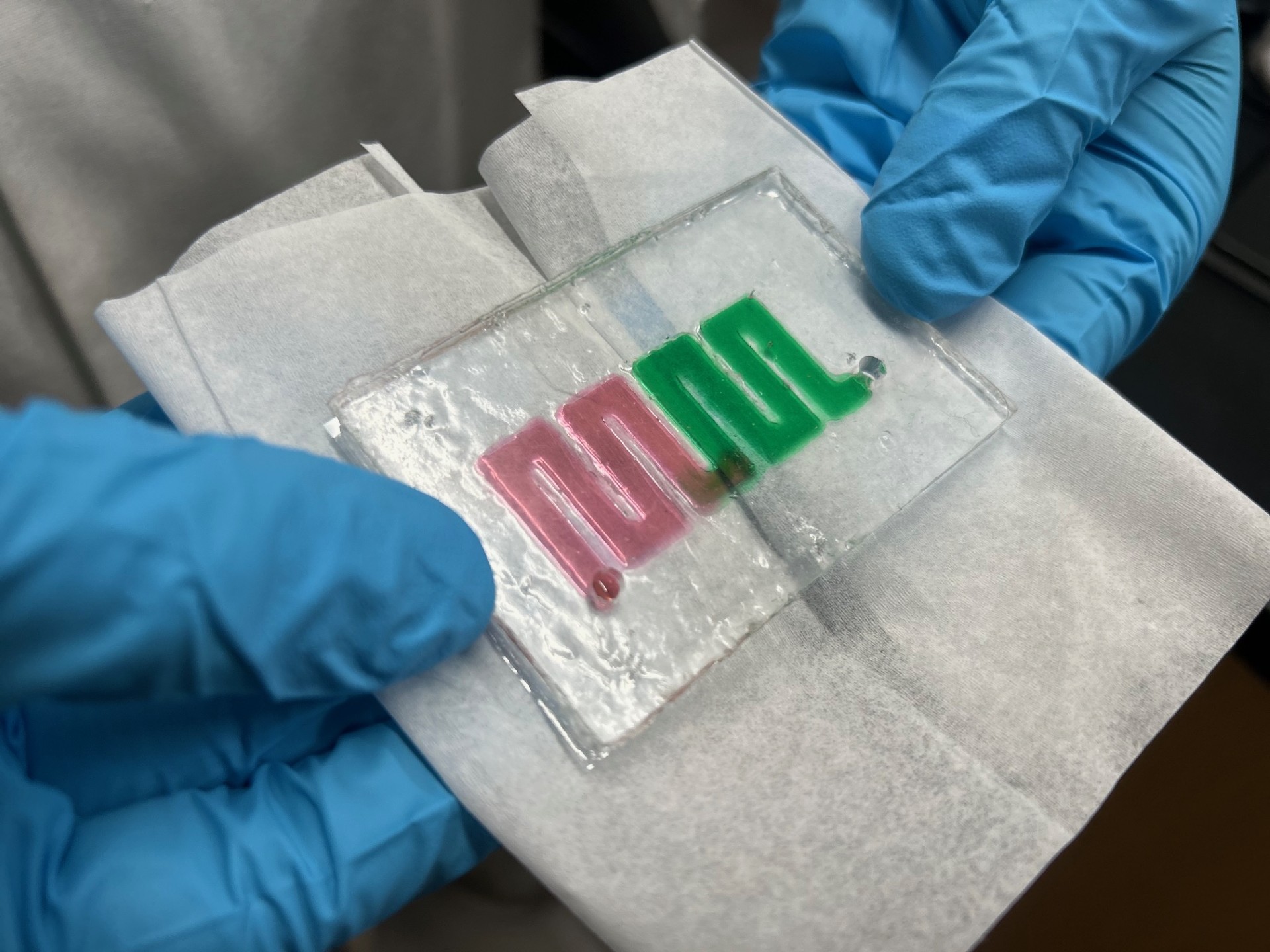
Coskun designed a “diet-on-a-chip” method, placing salivary gland cells on a flat chip in an isolated environment, then creating formulas of molecules that mimic individual diets, such as low-fat, Mediterranean, or ketogenic diets.


The formula is mixed with the organ cells, and the researchers analyze the subsequent network of molecular changes and take spatial measurements.

A close up on the 'diet-on-a-chip' model used to study Sjögren’s disease.
A closeup of the 'diet-on-the-chip' model used to study Sjögren’s disease. (Photo courtesy of Ahmet Coskun)

“Diet influences everything,” Coskun said. “Researchers feed mice capsules to look at tumor growth with different diets. We took this approach with the organ on a chip to mimic human physiology.”


In addition to testing various diets, Coskun uses patient biopsies of salivary glands to assess the communication between local nerve fibers and nearby epithelial cells. By arranging this interface of neurons, he can create an index of how metabolic factors affect neuron signals. Artificial intelligence techniques like machine learning sort through over 20,000 molecules and their interactions with these patient samples. 


With the Sjögren’s Foundation support, Coskun and his lab are currently mixing and cultivating salivary gland cells to place on the chips. By next summer, Coskun expects to have initial results that show diet-on-a-chip differences as well as the variations between different patients’ neuron interactions.


“True interdisciplinary research like this is where you find the real solutions to challenging problems,” said Coskun. “Without clinicians and biologists, an engineer is just playing with toys that won’t reach a patient. Putting it all together makes a real impact. The science of drug discovery is expensive, and our work will help narrow down the targets for future treatments, while providing clinicians with better insight on nutritional recommendations for patients now."

Media Contact

Contact the BME Communications team to connect with a faculty member or student about academics or research happening in the Wallace H. Coulter Department of Biomedical Engineering.