Long before he arrived on Georgia Tech’s campus, Inho Lee knew he wanted an undergraduate experience that would challenge him to think across disciplines and apply engineering in ways that could meaningfully improve human health. He found that in the Wallace H. Coulter Department of Biomedical Engineering.
“The opportunity to work across labs that combine computation, molecular engineering, and translational research made Coulter BME an ideal environment,” Lee said. “It allowed me to explore how engineering principles can be applied to investigate disease and develop solutions that matter in real-world settings.”
Lee’s academic interests took shape through hands-on, interdisciplinary research experiences that blended molecular engineering and computation. His work ranged from engineering protease-activated cell therapies to building computational models of cellular metabolism. Each project moved him closer to his long-term goal: developing responsive therapeutic systems with real clinical impact. Along the way, he learned not only technical skills, but also the value of asking the right questions—and persisting when answers were not immediately clear.
“The opportunity to work across labs that combine computation, molecular engineering, and translational research made Coulter BME an ideal environment,” Lee said. “It allowed me to explore how engineering principles can be applied to investigate disease and develop solutions that matter in real-world settings.”
Research was a defining part of Lee’s undergraduate experience. He presented undergraduate research at the 2025 Biomedical Engineering Society (BMES) Annual Meeting in San Diego and gained industry exposure through an internship and co-op at Regeneron Pharmaceuticals in the Obesity, Metabolism, and Muscle Diseases department. The experience offered insight into how academic research translates into therapeutic development and helped shape Lee’s career direction toward advanced research training.
Beyond his own research accomplishments, Lee remained deeply committed to supporting others. He was actively involved in mentoring and teaching, with a particular focus on helping new lab members find their footing and grow into independent researchers. For Lee, mentorship was not an obligation but a responsibility—and one of the most rewarding aspects of his time in Coulter BME.
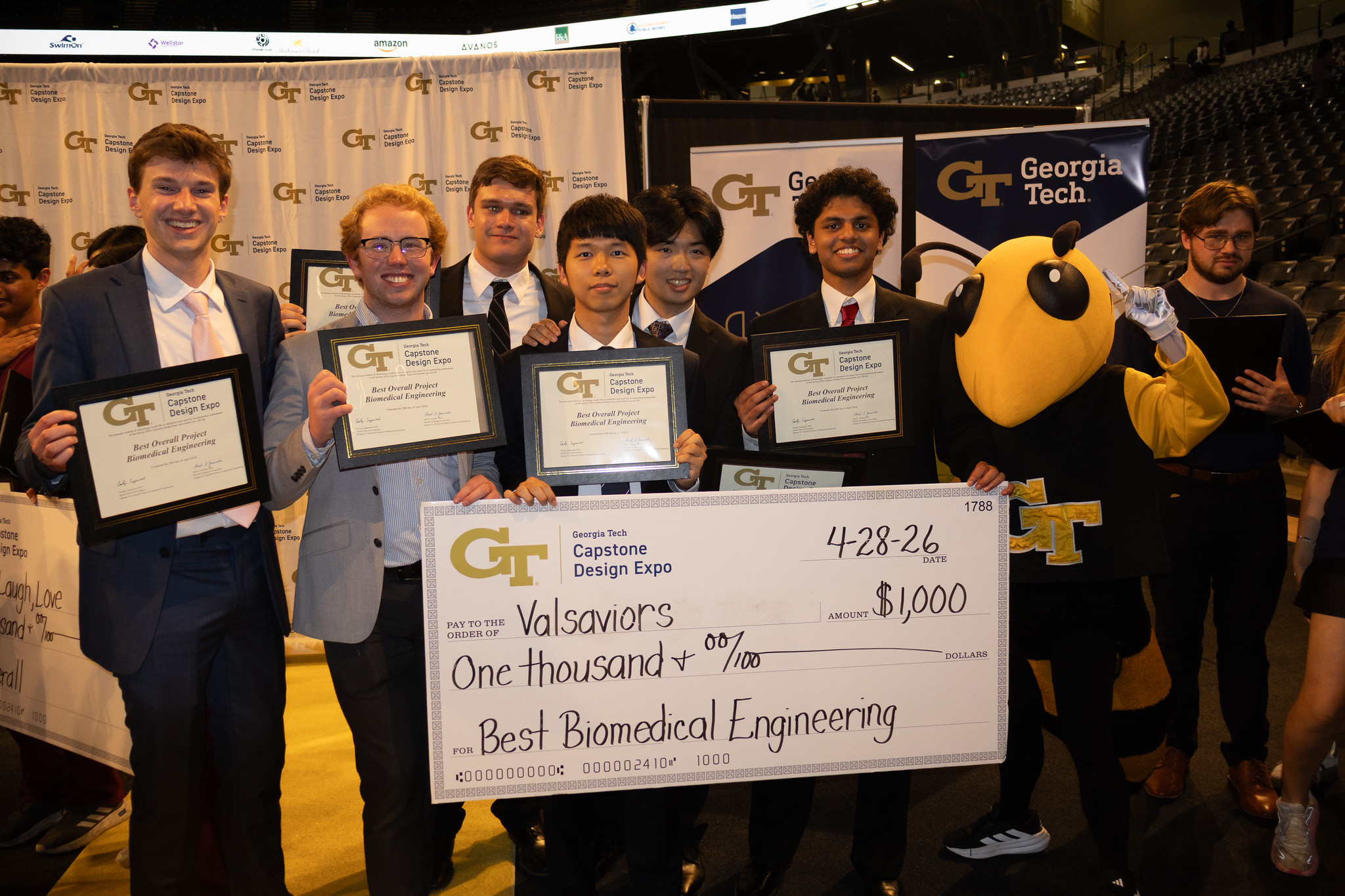
Lee’s academic and research excellence were recognized with several honors, including the Outstanding Academic Excellence Award for Biomedical Engineering, the Outstanding Junior Award for Biomedical Engineering, and the President’s Undergraduate Research Award. He was also the recipient of multiple external scholarships. Lee also participated in the Spring Capstone Competition, where his team, Valsviors, won Best BME Project.