Title

Life‑Saving Ideas Take Center Stage as BME Teams Dominate Capstone Expo for Sixth Consecutive Semester

ID
Apr 29, 2026 | By Kelly Petty
News Image
Group photo of Coulter BME Capstone teams. On the far left side of the photo stands Chris Rovell, Profeesor of the Practice and one of the faculty advisors for the BME capstone program. (left to right): Team Valsaviors and Team Liver, Laugh, Love.
Image Caption
Winning Coulter BME capstone teams (l to r): Team Valsaviors, winner of Best BME Capstone Project; and Team Liver, Laugh, Love, winner of Best Overall Capstone Project at the Georgia Tech Spring 2026 Capstone Expo (photo by Kayden Schuster).
Widgets

A device that could improve the quantity and quality of donated organs for transplant patients took top honors at the College of Engineering’s annual spring Capstone Expo.

Team Liver, Laugh, Love earned Best Overall Capstone Project, tying for first place with Aerospace Engineering’s Air.Space.Denial team and giving the Wallace H. Coulter Department of Biomedical Engineering its sixth consecutive win.

BME teams have won the top prize in the last five semester Capstone competitions dating back to Fall 2023.

Team Liver, Laugh, Love won for its innovative liver machine perfusion and transport device, designed to bridge critical gaps between organ preservation, machine perfusion, and long-distance transport. The system keeps donor livers at optimal temperatures for up to 12 hours, delivers oxygen to both the portal vein and hepatic artery, and enables organs to be safely transported across long distances.

The team’s approach has the potential to significantly expand the number of viable donor livers available for transplantation across the United States—particularly organs that might otherwise be discarded.

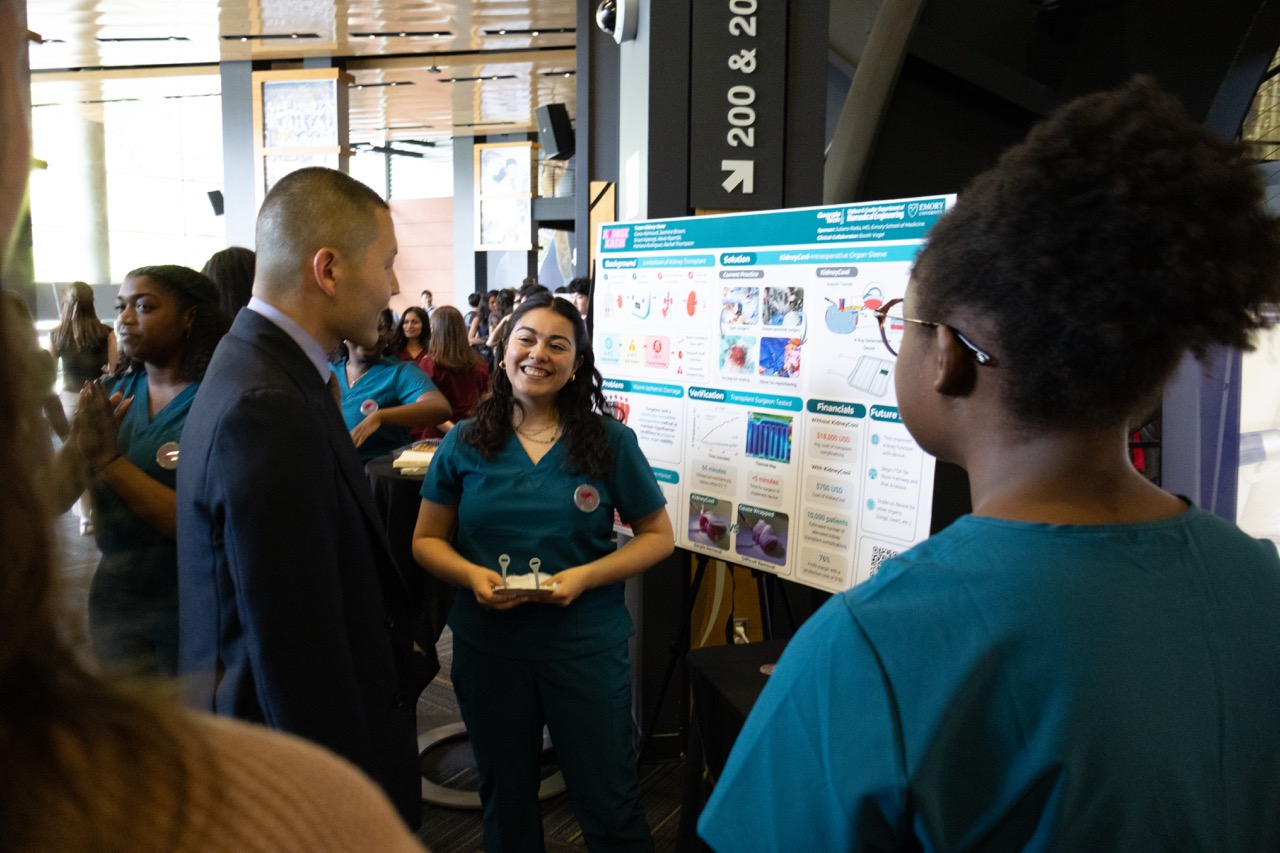
Two women members of Team Kidney Krew show a Capstone Expo attendee (male) their project.
Members of Team Kidney Krew show a Capstone Expo attendee their project, a single-use sleeve placed on a kidney during a transplant procedure to maintain a consistent cool temperature during surgery. (photo by Kayden Schuster)

Team members credited close clinical collaboration as essential to the project’s success.

“Honestly, the most helpful thing that we could have possibly had was Emma Kate, our clinical collaborator,” said Shobana Santhanam. “She's going into general surgery. So, she had a lot of experience in the transplant world. She was with us every week and we would talk to her—we would talk through the issues that we were facing. She would help us get the resources that we need.”

The project has already drawn strong interest beyond the classroom. The team’s physician sponsors plan to explore a patent for the device.

 “It’s incredibly rewarding to know they believed in us—and now want to take the next steps toward real-world impact,” said Ritu Rai.

For Team Liver, Laugh, Love, the BME capstone experience applies their years of course study to focus on a real clinical need.

“It’s the most pivotal class I’ve taken,” said a third team member. “Everything we’ve learned came together in one project. BME really pushes you to engage with real clinicians—we spoke with more than 24 surgeons and perfusionists—which helped us understand what the world actually needs and how we can help.”

“BME specifically puts a big emphasis on us actually going out there and talking to real clinicians, real people that would use our devices,” said Brennan Long. “So that gives us a really good perspective on what the world actually needs and what we can do about.”

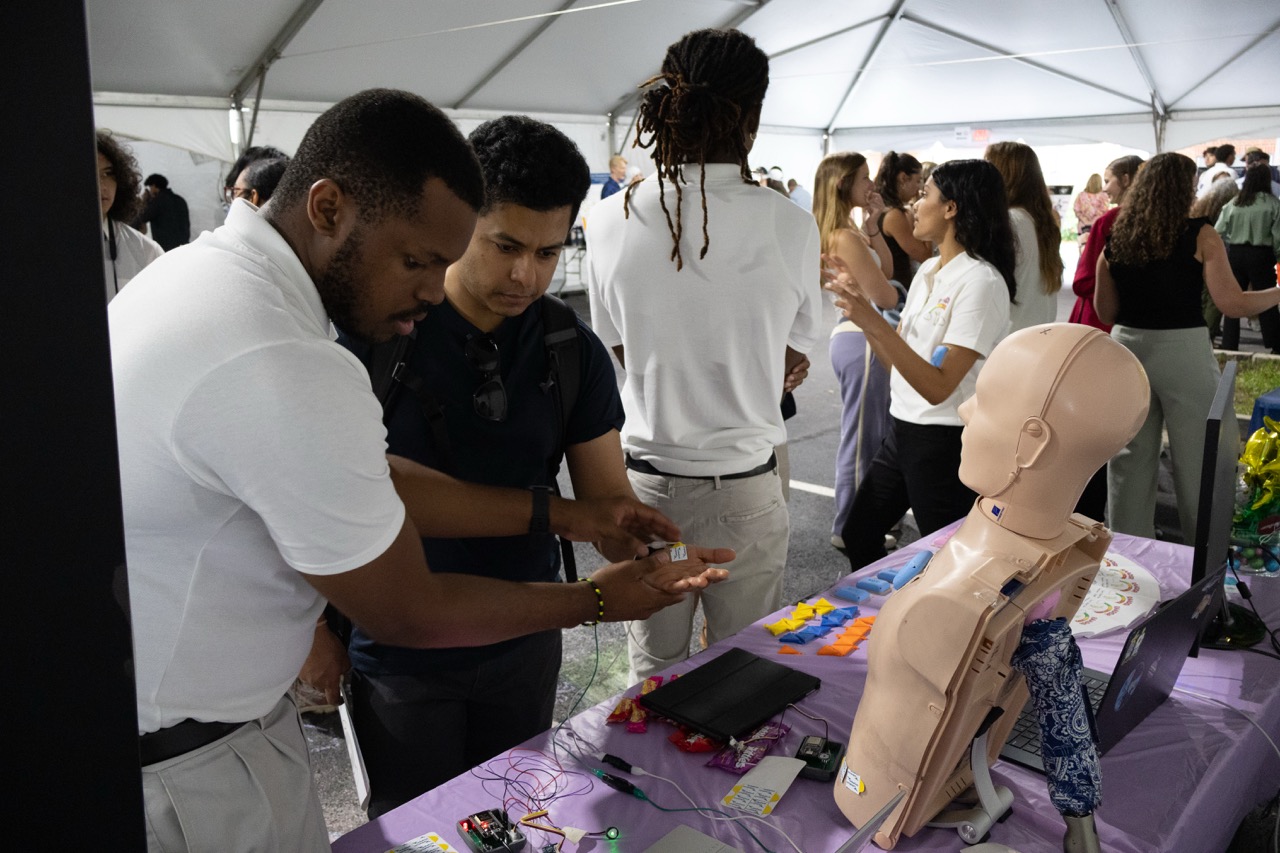
An African American male student on a BME capstone team shows a Capstone Expo attendee (male) the device his team created. Other students are wlaking around in the background inside of the large tent exhibit space.
A member of Team RAADSR demonstrates the Vibe Check, a wearable biosensor device that can detect the onset of challenging behavior in children with autism. The device uses Machine Learning to monitor psychological behavior. (photo by Kayden Schuster)

Best BME Capstone Project Improves Detection of a Common Heart Condition

Team Valsaviors, winners of the Best BME Capstone Project, developed a a single-use, patient-oriented device that standardizes the Valsalva maneuver—a critical diagnostic technique used to detect left ventricular outflow tract obstruction in patients with hypertrophic cardiomyopathy (HCM).

HCM affects an estimated 750,000 people in the United States and up to 15 million worldwide, yet 80–90% of cases go undiagnosed. Diagnostic techniques like the Valsalva maneuver are essential for identifying obstruction that may not appear during resting echocardiography, but inconsistent patient effort often limits reliability.

The team’s device visually guides patients to achieve and maintain the correct pressure, eliminating much of the inconsistency inherent in self-directed efforts.

“It was a surprise—a welcome surprise,” said Spencer Lawing. “But it really validated that the work we’re doing matters, and that it could help a lot of people.”

The project has already progressed into early commercialization steps, according to the team.

“Emory [University sponsor] filed provisional patents for our device,” Inho Lee said. “Our device addresses all the key user needs that we identified during the interview process. So they were very excited to take this forward.”

Beyond technical innovation, students highlighted the professional preparation the capstone program provides.

“I learned a lot about how industry works, so patentability, market analysis—and that's going to really help all of us in the future, whether it be working in industry or growing startups,” said Tzak Lau.

Biomedical engineering capstone teams MindFrame and Kidney Krew captured Honorable Mention awards, and Team Char Wars was named Best Interdisciplinary Project, with one BME student contributing to the collaboration.

See the full photo gallery of BME teams at Capstone Expo here.

Media Contact

Contact the BME Communications team to connect with a faculty member or student about academics or research happening in the Wallace H. Coulter Department of Biomedical Engineering.