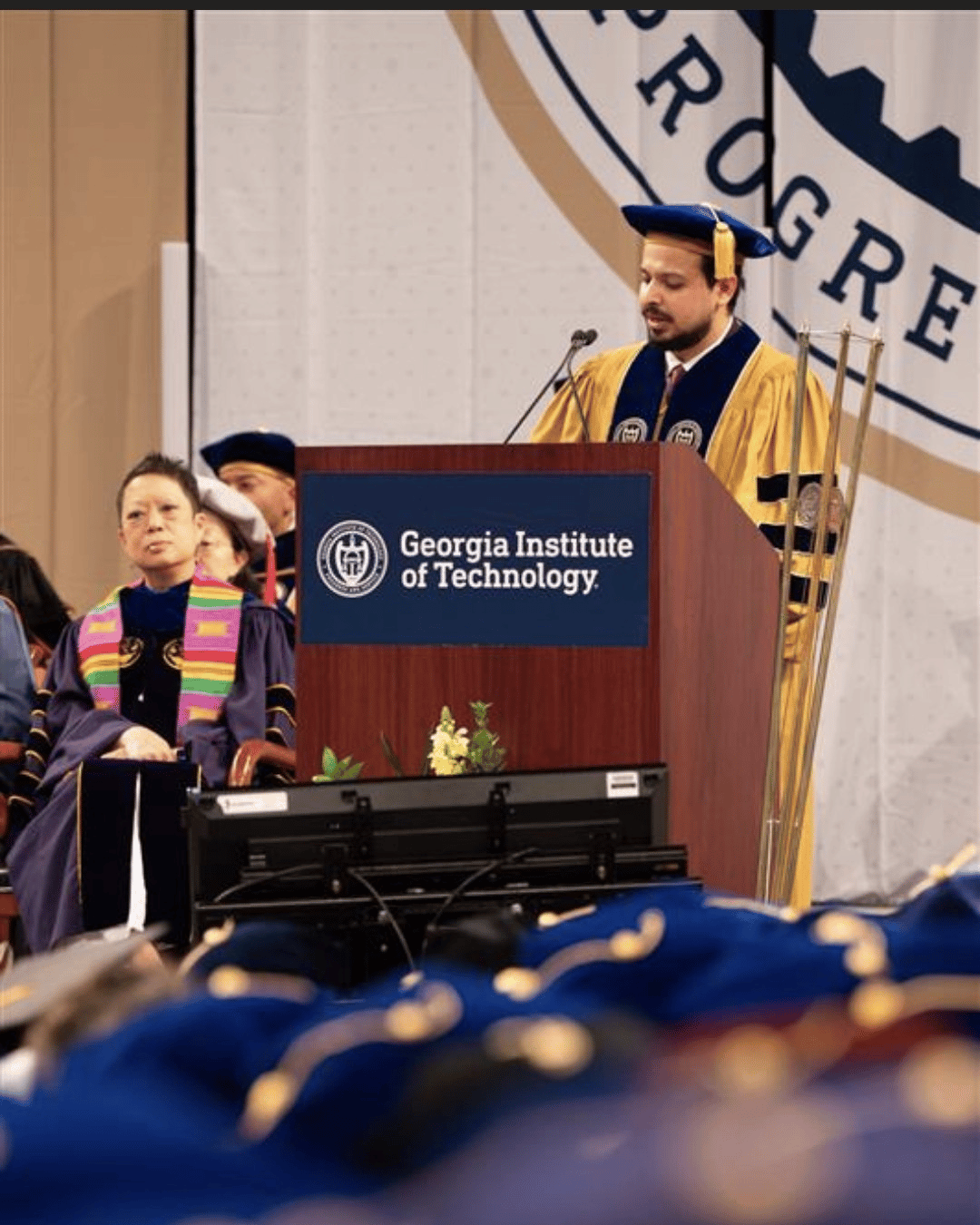
Anamik Jhunjhunwala’s doctoral research set out to solve one of the most persistent challenges in cell-based therapies: understanding what happens to therapeutic cells once they enter the body. Now, that work has earned him the Sigma Xi Research Award for Best Ph.D. Thesis, recognizing both the scientific rigor of his approach and its potential to advance real-world medical applications.
Jhunjhunwala’s research focused on improving cell-based therapies, an emerging class of treatments with applications ranging from regenerative medicine to cancer therapy. His advisor was Coulter BME professor Stanislav Emelianov.
“My Ph.D. thesis focuses on combining imaging and nanotechnology tools to better understand and improve cell therapies,” Jhunjhunwala said. “A major challenge in this field is that after cells are administered, it is difficult to determine where they go, how long they persist, and whether they remain biologically functional.”
To address this challenge, Jhunjhunwala developed nanoengineered labeling strategies that make it possible to track therapeutic cells noninvasively inside the body using imaging techniques that allow researchers to visualize biological processes in real time, without disrupting the cells themselves.
One major component of the work involved designing nanosensors capable of reporting cell location, viability, and retention over time. Jhunjhunwala also created nanoparticle systems that enable magnetic guidance, helping direct stem cells to specific locations in the body, retain them at the target site, and track their movement after delivery.
A second area of his thesis expanded the capabilities of photoacoustic imaging by extending multiplexing from two to four channels. This advance allows researchers to monitor multiple cell types simultaneously or design nanosensor panels that detect several clinically relevant biomarkers at once, supporting more complex and informative studies of cell therapies.
“For me, this award is recognition that the work has real scientific impact—not just in completing a dissertation, but in advancing practical tools and ideas that others can build on,” Jhunjhunwala said. “It also reflects the mentorship and community behind the work.”