Title

Engineering Safer Surgeries

ID
Mar 04, 2026 | By Kayden Shuster
News Image
A person wearing surgical scrubs and gloves uses a metal tool to work with a stainless‑steel medical device or instrument tray in a clinical environment. Medical equipment and curtains are visible in the background.
Image Caption
Saif Khan sets up the RECUVERY system at a hospital in Quito, Ecuador.
Widgets

When a team of Coulter BME biomedical engineering students touched down in Quito, Ecuador on Jan. 25, they carried more than luggage. Team “Leave No Trace” also brought their vision for preventing surgical errors in operating rooms. 

Retained surgical items (RSIs) are serious yet preventable surgical complications in which sponges or gauze are unintentionally left inside a patient after surgery. In low- and middle-income countries, where access to intraoperative imaging is limited, surgical teams often rely solely on manual counting. This contributes to rates of RSIs as high as 1 in 300, increasing the risk of infection, repeat operations, and prolonged recovery. 

Leave No Trace, one of the BME Advanced Capstone teams, is addressing this challenge with RECUVERY — a comprehensive visibility and tracking system designed specifically for resource-constrained operating rooms. The system combines Ultraviolet (UV)-reactive surgical sponges that fluoresce under UV light with SurgiClip magnetic attachments and the SurgiRack display system, providing surgical teams with a clear visual workflow to support counting and quickly identify missing items before closure. 

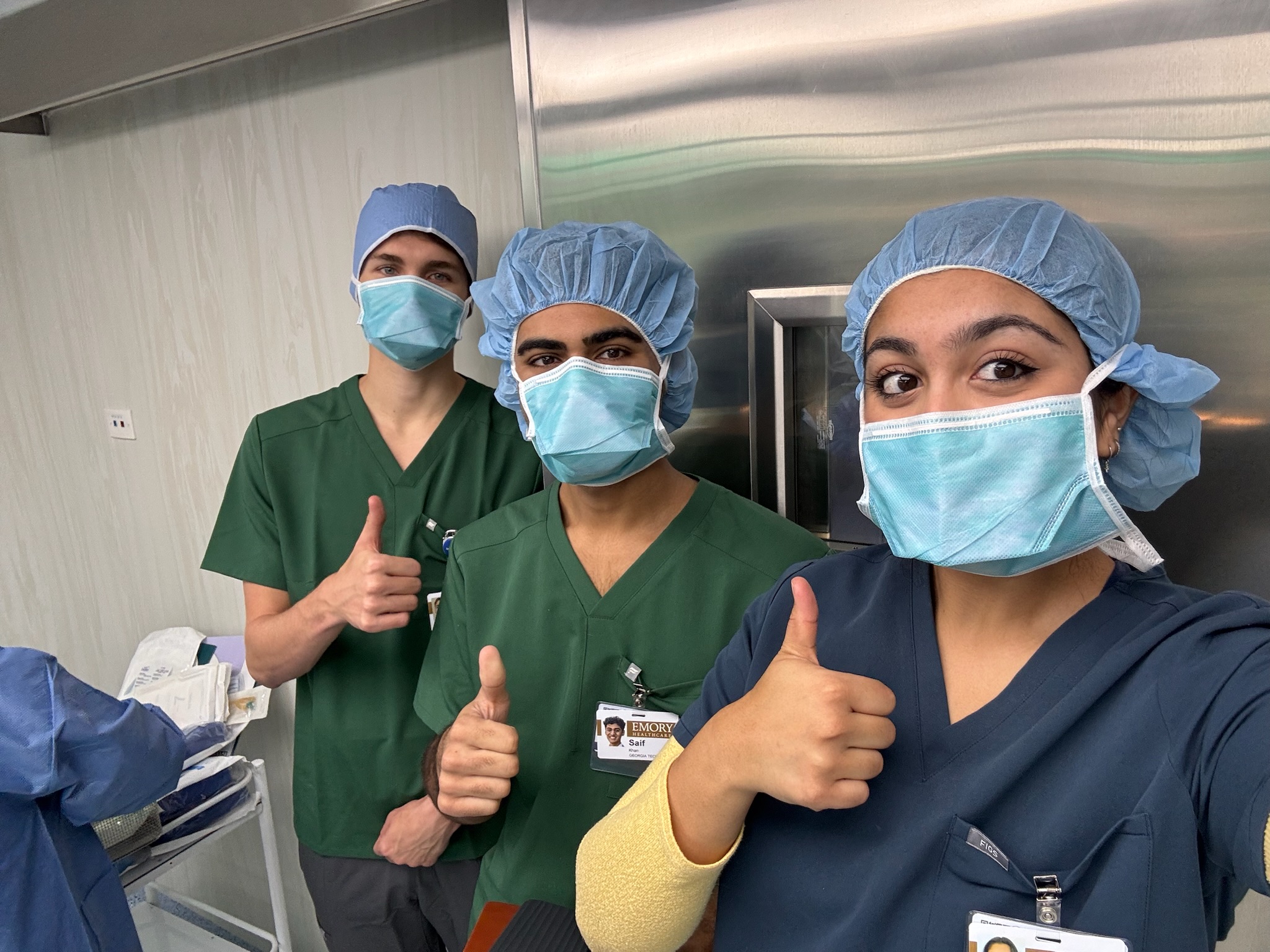
Three individuals in surgical scrubs and hair covers stand together in a clinical setting, each giving a thumbs‑up gesture. Medical equipment and stainless‑steel surfaces are visible in the background.
Team Leave No Trace members Saif Khan, Ryan Altera, and Neha Shahrawat give a thumbs up during their visit to Quito, Ecuador.

Team Leave No Trace, which includes Thanmayee Kavuri, Neha Shahrawat, Ryan Altera, Saif Khan, and bioinformatics student Maxi Brogi, began their journey in an introductory biomedical engineering class, learning the basics of engineering and design. Four years later, the team found themselves standing in operating rooms in Quito, Ecuador, working alongside surgeons, nurses, and clinical staff to help address a real patient safety challenge. 

Shadowing surgical teams in Quito gave Leave No Trace firsthand insight into real workflows, real constraints, and real clinical needs. These observations will help them refine RECUVERY to better fit into the operating room environment. 

Traveling to Ecuador was truly a once-in-a-lifetime experience. Seeing our technology in operating rooms not only informed our design process but showed us that this problem goes beyond preventing RSIs and applies to increasing access to equitable healthcare.
Thanmayee Kavuri
Member, Team Leave No Trace

The team will continue their work through Advanced Capstone, further iterating and refining the device based on clinical feedback gathered in Ecuador. A core focus of Advanced Capstone is ongoing customer discovery — interviewing clinicians repeatedly to ensure solutions evolve with real user needs.   

Shahrawat credits Advanced Capstone for providing the enrichment opportunities to take RECUVERY to the next level. "Capstone was an amazing opportunity to develop essentially a novel medical device for an unmet clinical need in just 16 weeks. Advanced [Capstone] mirrors the real world and helps us create something that truly helps save lives.” 

By designing alongside clinicians and prioritizing accessibility and simplicity, Leave No Trace aims to reduce preventable surgical harm and help ensure retained surgical items truly become “never events.” 

Their team’s innovation and impact have already been recognized beyond the classroom — Leave No Trace placed third in the Hult Prize at Georgia Tech, highlighting both the global relevance and entrepreneurial potential of their solution. 

Reflecting on their journey together, Khan says, "It’s so fun to see how things pan out after working for four years...seeing how much you have learned and grown. It all builds up to this." 

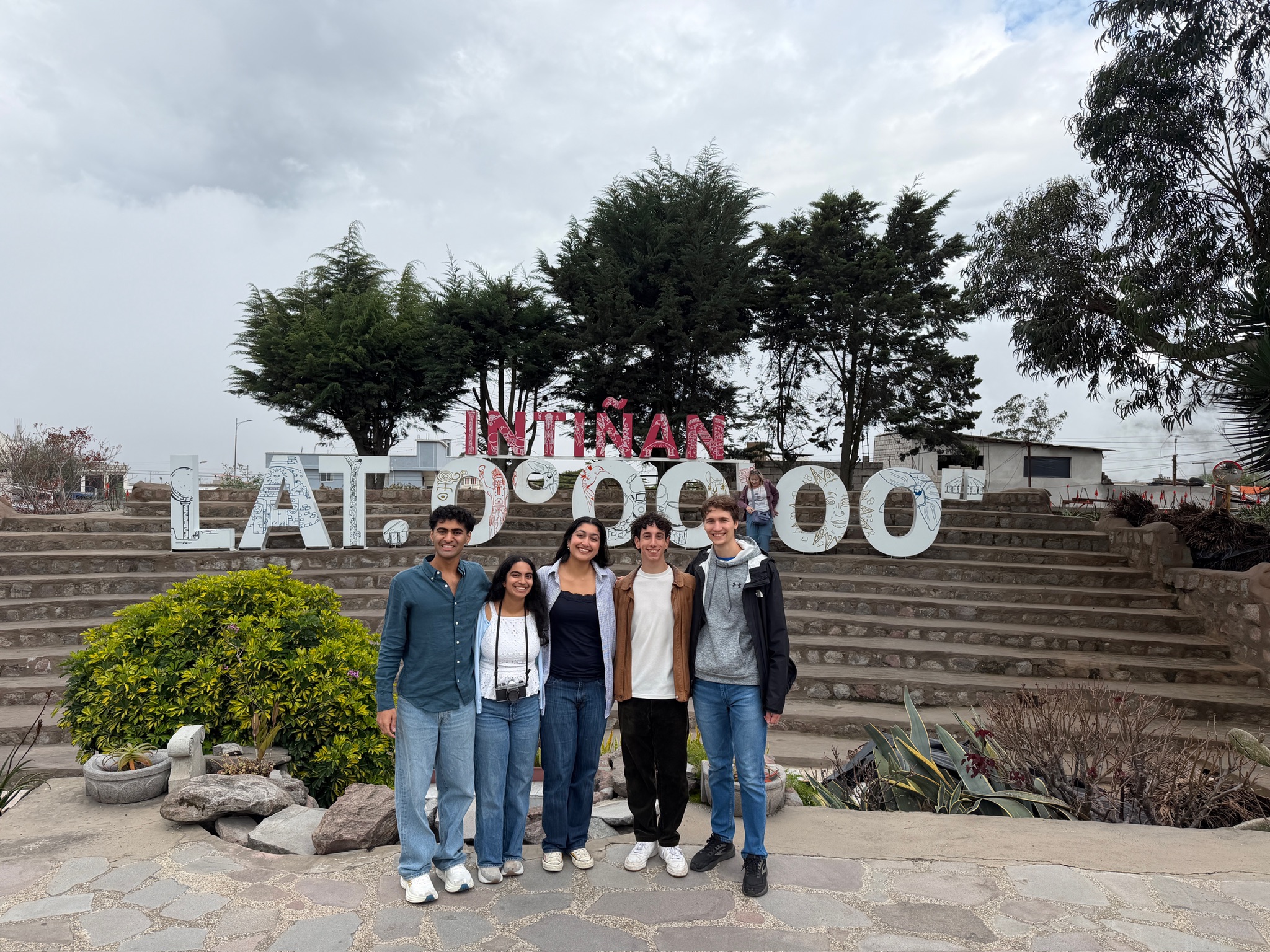
A group of five people stands together in front of a large outdoor display at the Intiñan Museum in Ecuador, featuring big white letters marking latitude 0°0'0". The group is positioned on a stone walkway with steps and tall trees in the background, under a cloudy sky.
Team Leave No Trace members Saif Khan, Ryan Altera, Neha Shahrawat, Maxi Brogi, and Thanmayee Kavuri visit the Intiñan Museum in Quito, Ecuador.

Media Contact

Contact the BME Communications team to connect with a faculty member or student about academics or research happening in the Wallace H. Coulter Department of Biomedical Engineering.