Title

Melissa Lambeth Kemp

Headshot Placeholder
Photo of Melissa Kemp
Title/Position
Carol Ann and David D. Flanagan Endowed Chair in Biomedical Engineering, Georgia Cancer Coalition Distinguished Cancer Scholar
Contact

Contact

EBB 3019Georgia Tech
404.385.6341
Education

Education

  • B.S. Nuclear Engineering, MIT, 1997
  • Ph.D. Bioengineering, University of Washington, 2003
Research Interests

Research Interests

Dr. Kemp serves as the Research Director for the NSF-funded Engineering Research Center in Cell Manufacturing Technologies and as the Deputy Director of the Marcus Center of Excellence in Cell Biomanufacturing. Her research program is focused on understanding how metabolism influences the decisions that cells make. Aging, stem cell differentiation, cancer metastasis, and inflammation rely on progressive changes in metabolism resulting in increased levels of reactive oxygen species.  The accumulation of these molecules is known as cellular oxidation, and pathological levels are referred to as oxidative stress. The Kemp lab develops systems biology tools for investigating how cellular oxidation influences cellular fate and interpretation of cues from the extracellular environment. Through multicellular simulations, Dr. Kemp's research group investigates the collective behavior that arises during stem cell differentiation, immune cell responses, or drug treatments from metabolic diversity in individual cells. Because of the numerous biochemical reactions involved, the Kemp lab develops computational models and analytical approaches to understand how complex protein network properties are influenced by redox-sensitive proteins; these proteins typically have reactive thiol groups that are post-translationally regulated in the presence of reactive oxygen species to alter activity and/or function. Experimentally, Dr. Kemp's research group also develops novel high-throughput single cell techniques for the detection and quantification of intracellular oxidation.

Teaching Interests

Teaching Interests

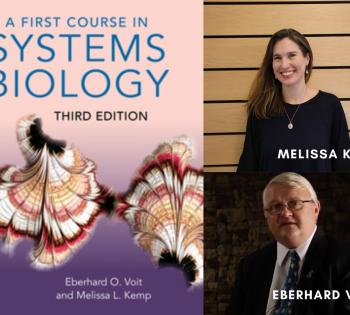
Melissa Kemp is co-author of the award-winning textbook "A First Course in Systems Biology: 3rd Edition" and has a longstanding interest in translating practices from her computational research into the classroom. She has developed three graduate courses on systems biology and teaches BMED 3520 Biomedical Systems Modeling at the undergraduate level.
Publications

Publications

Hartsock, I., Park, E., Toppen, J. et al. Topological data analysis of pattern formation of human induced pluripotent stem cell colonies. Sci Rep 15, 11544 (2025). https://doi.org/10.1038/s41598-025-90592-1
de Perez AR, Anderson PE, Dimitrova ES, Kemp ML (2025) Neural network approaches, including use of topological data analysis, enhance classification of human induced pluripotent stem cell colonies by treatment condition. PLoS Comput Biol 21(7): e1012801. https://doi.org/10.1371/journal.pcbi.1012801
Norfleet, D.A.; Melendez, A.J.; Alting, C.; Kannan, S.; Nikitina, A.A.; Caldeira Botelho, R.; Yang, B.; Kemp, M.L. Identification of Distinct, Quantitative Pattern Classes from Emergent Tissue-Scale hiPSC Bioelectric Properties. Cells 2024, 13, 1136. https://doi.org/10.3390/cells13131136
Peyton, S.R., Chow, L.W., Finley, S.D. et al. Synthetic living materials in cancer biology. Nat Rev Bioeng 1, 972–988 (2023). https://doi.org/10.1038/s44222-023-00105-w
Nikitina, A. A., Roysam, T., & Kemp, M. L. (2023). Early dynamic changes in iPSC oxygen consumption rate predict future cardiomyocyte differentiation. Biotechnology and Bioengineering, 120, 2357–2362. https://doi.org/10.1002/bit.28489
Media

Media

Featured In