Title

Larry McIntire, Ph.D.

Subhead
Remembering A Visionary Who Shaped Coulter BME
Sections
Photo of Larry McIntire

Larry McIntire, who shaped the trajectory of the Wallace H. Coulter Department of Biomedical Engineering at Georgia Tech and Emory University as its second chair, died on January 23, 2026. 

McIntire served as Coulter Department chair from 2003 to 2013, guiding the young joint enterprise through a critical period of growth and international recognition. He was a faculty emeritus who influenced the broader biomedical engineering community for more than five decades. 

“Larry was an exemplar researcher, teacher, leader and colleague,” said Alyssa Panitch, Coulter BME chair. “His impact on our department can be felt everywhere, from the outstanding teaching facilities, the well-integrated structure of the joint Emory/Georgia Tech department, the makeup of the faculty, and the collegiality that makes Coulter BME such a wonderful place to work, learn, and be a scholar.  He will be missed by his Coulter BME family.”

Expanding a Young Program

When McIntire arrived in 2003 to lead the joint department, he brought deep experience as a scholar and institution builder from Rice University, where he had chaired both Bioengineering and the Institute of Biosciences and Bioengineering. At Georgia Tech and Emory, he expanded a distinctive model — uniting engineering and medicine across a public–private partnership — that would become a national exemplar for translational research and education.

Under his leadership, BME accelerated collaborations between clinicians and engineers, strengthened graduate and undergraduate education, and advanced high‑impact research in areas including biomechanics, imaging, cellular and tissue engineering, and nanomedicine. 

Colleagues often described McIntire as a “matchmaker” of ideas and people — a leader who had a rare talent for connecting individuals with complementary expertise to spark impactful work. He cultivated environments where collaborations could flourish, from informal workshops pairing Emory clinicians with Georgia Tech engineers to strategic international initiatives. 

“He was a quiet person. He did not talk a lot,” remembered Cheng Zhu, Regents' Professor and Executive Director for International Programs in Coulter BME. “He had vision and a very clear mind on what he thought was right and he did it.”

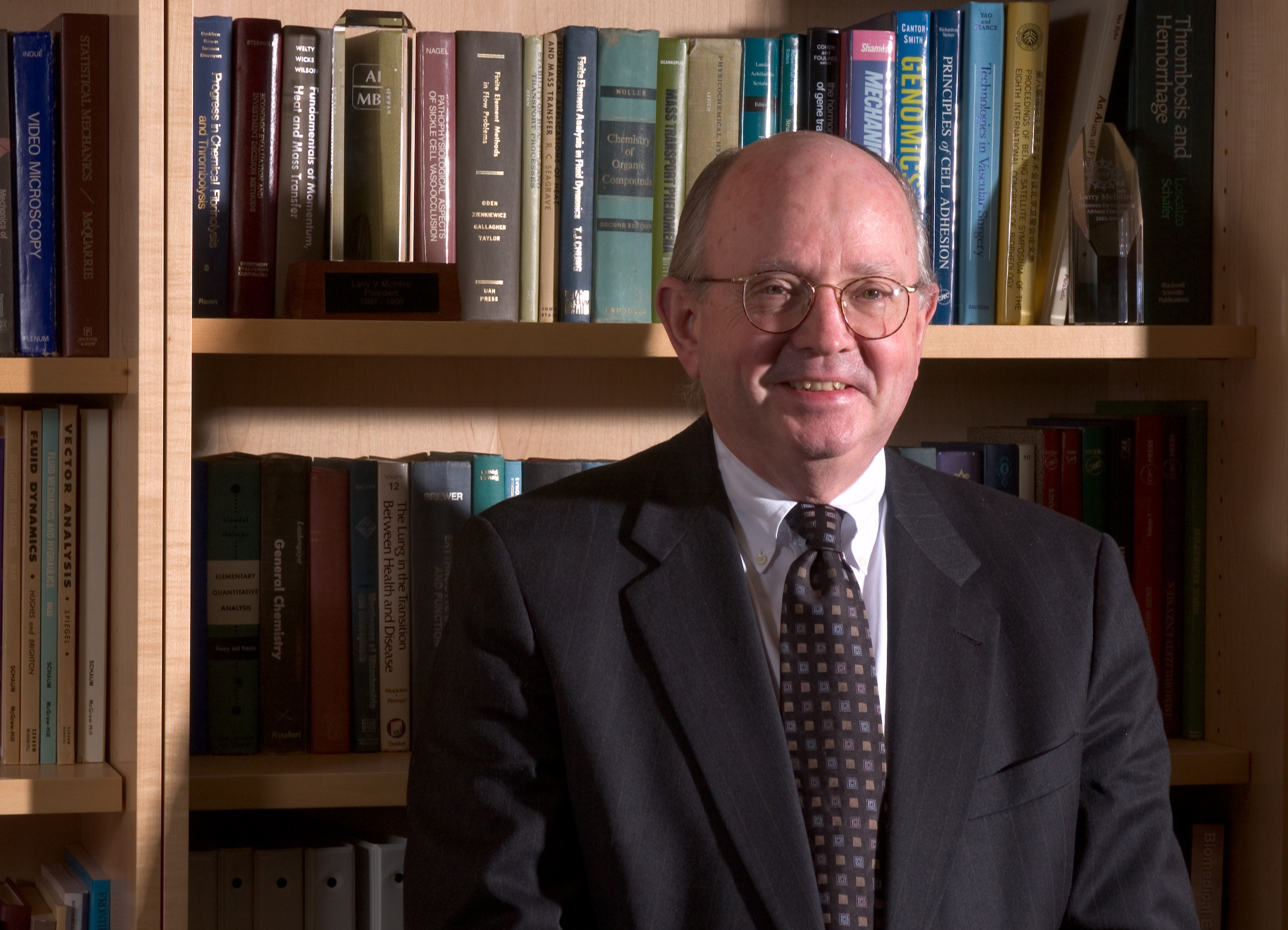
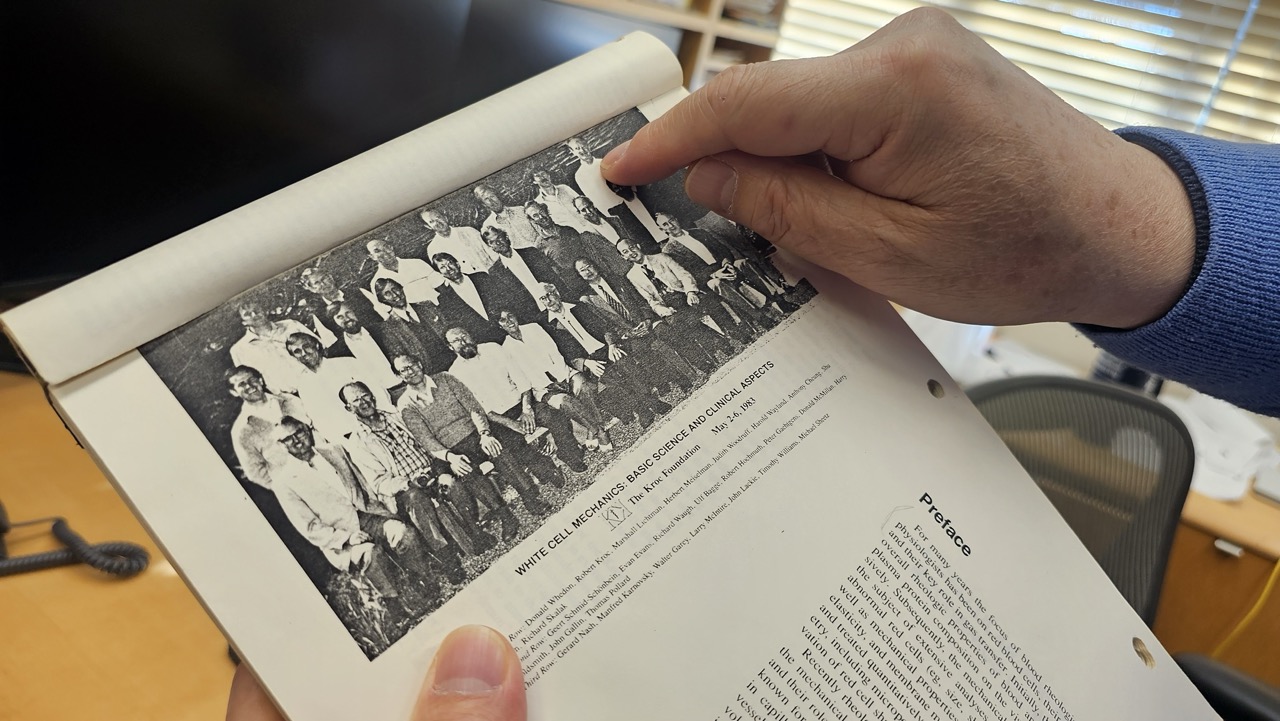
Photo of Professor Emeritus Larry McIntire in the White Cell Mechanics textbook
Prof. Cheng Zhu points out Prof. Larry McIntire in an old version of the White Cell Mechanics textbook. Zhu said when he was a graduate student back in 1990, McIntire sent him a copy of the textbook to inspire his research work.

Research that Guided Biomedical Engineering

As a scholar and chemical engineer by training, McIntire was a pioneer in the study of how fluid mechanics and cellular forces shape vascular biology. His work illuminated fundamental principles of endothelial mechanobiology, thrombosis, and inflammation — insights that have contributed to decades of research worldwide. His publication record spans studies on platelet dynamics, endothelial responses to shear stress, and vascular pathophysiology. His findings helped develop a scientific foundation still relied upon by many in today’s biomedical engineering community. 

His achievements earned him election to the National Academy of Engineering in 2001, recognizing his pioneering research and leadership in engineering education. He also was honored with fellowships in the American Association for the Advancement of Science (AAAS) and the American Institute for Medical and Biological Engineering, where he served as president. 

“Larry's research in how immune and blood vessel cells respond to fluid mechanics were pioneering and foundational to many others' scientific discoveries in subsequent years,” said Melissa Kemp, professor and Carol Ann & David D. Flanagan Endowed Chair. “He was truly an intellectual giant that shaped many facets of biomedical engineering.”

McIntire was also a respected public voice for science, serving as chair of AAAS Section M (Engineering) and helping national leaders grapple with emerging questions in biomedical regulation and innovation. He championed the importance of thoughtful scientific guidance in federal policy, particularly at a time when new classes of therapeutics, biomaterials, and combination products were challenging traditional regulatory pathways. 

Throughout his career, McIntire partnered with his wife, Suzanne “Suzie” Gaston Eskin, on vascular endothelial biology research. They co‑mentored dozens of doctoral students at Rice, the Baylor College of Medicine, and Georgia Tech. Eskin served as a principal research scientist in Coulter BME until her death in 2024. 

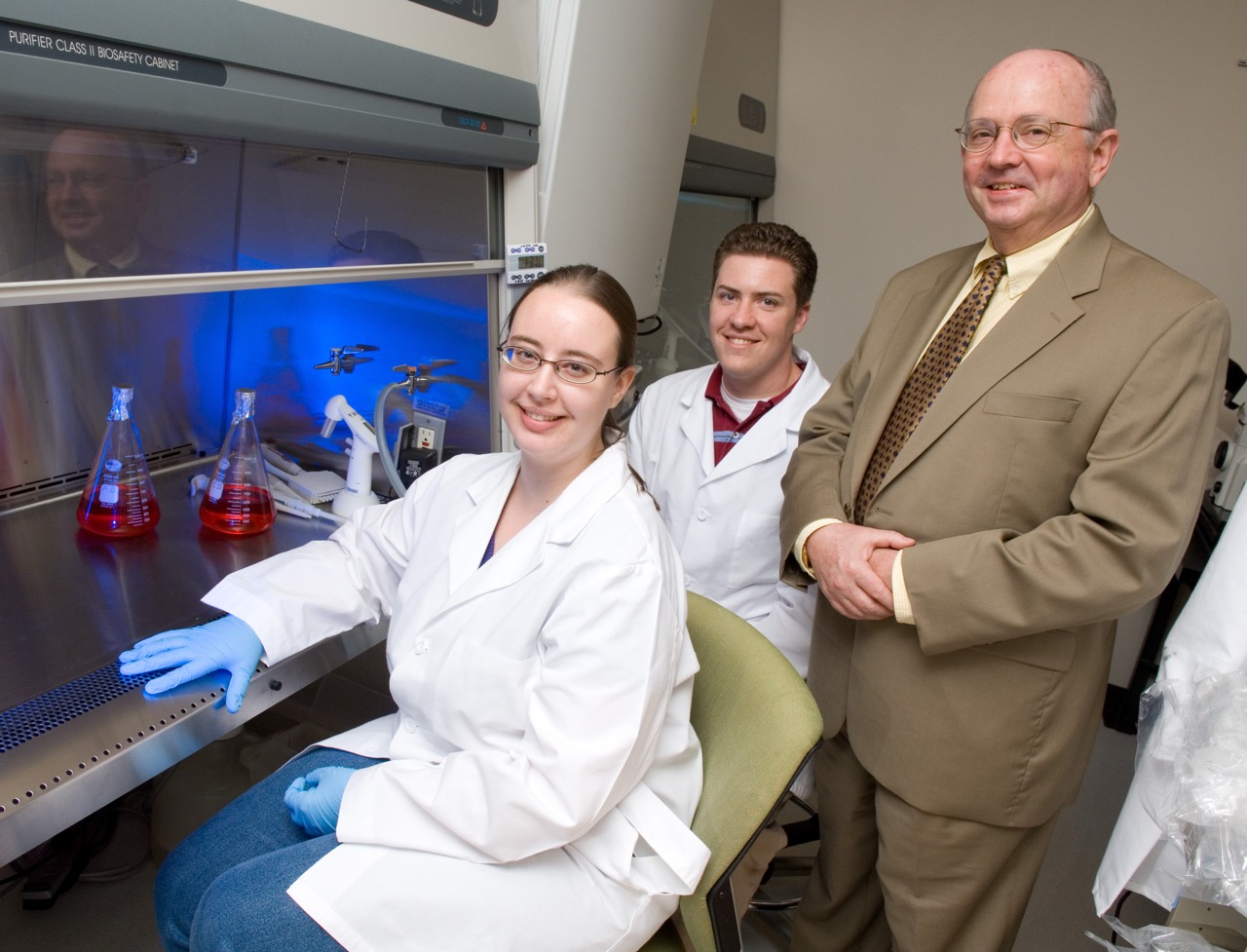
Photo of Larry McIntire and two students in his lab.
Prof. McIntire with student researchers in his lab.

A Mentor To Many

Colleagues and former trainees remember McIntire as a generous mentor who fostered interdisciplinary teams long before “team science” became the norm. At Emory and Georgia Tech, he convened workshops where clinicians described real medical problems and engineers outlined enabling technologies, catalyzing collaborations that yielded first‑in‑kind devices, imaging tools, and therapeutics. This culture of purposeful matchmaking — bringing people and ideas together —remains a hallmark of the Department. 

“His work opened the door for me and countless others,” said Wilbur Lam, the W. Paul Bowers Research Chair, who was hired by McIntire 15 years ago. “Luckily enough for me, Larry saw that an unvetted physician engineer fresh out of training with barely any experience, funding, or publications to his name could be an asset to our BME department,”

Lam added, “In essence, I owe my entire career to Larry and whatever modicum of success I personally have enjoyed can largely be attributed to him.” 

Kemp said McIntire will be remembered not only for his scientific and administrative leadership but also for his warmth, mentorship, and authenticity. 

“I was very fortunate that Larry guided the formative years of my faculty career,” she said. “He was a seasoned leader and very astute at recognizing long-term impact. His scientific vision of where biomedical engineering was heading greatly influenced how the GT/Emory program — as a young department — was able to arrive at the cutting edge of the field.”

Words of Remembrance

I have known Dr. McIntire since I joined graduate school at Rice University, where he was Department Chair, and was lucky enough to then be hired by him as an assistant professor once he moved to Atlanta. His impact on my career, and on the field of biomedical engineering, was tremendous.  He will be greatly missed.

- Johnna Temenoff, Carol Ann and David D. Flanagan Professor


I was very fortunate to have the formative years of my faculty career guided by Larry McIntire. A seasoned leader, he was very astute at recognizing long-term impact and had a scientific vision of where biomedical engineering was heading; this greatly influenced how the GT/Emory program as a young department was able to arrive at the cutting edge of the field. Both I and my husband, Charlie Kemp, are grateful for Larry's wisdom and advice on how we could best build our research programs and engage researchers in Atlanta. 

- Melissa Kemp, professor and Carol Ann & David D. Flanagan Endowed Chair