Title

Jeffrey Markowitz

Headshot Placeholder
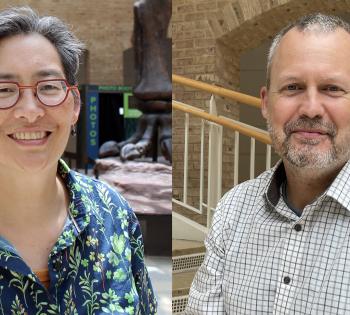
Photo of Jeffrey Markowitz
Title/Position
Assistant Professor
Areas of Research

Areas of Research

Neuroengineering
Contact

Contact

U.A. Whitaker, Office 3102Georgia Tech
404.385.3666
Education

Education

  • Ph.D. in Computational Neuroscience, 2014 - Boston University
  • B.A. in Philosophy, 2006 - Johns Hopkins University
Research Interests

Research Interests

The overall mission of my lab is to resolve how the brain controls movement in health and disease. We strongly believe that one of the primary challenges in answering this question is technical, namely that we require more precise and robust tools for measuring and quantifying both behavior and neural activity. Thus, we are pursuing the development of novel experimental and computational techniques for tracking kinematics in mice and new fluorescent biosensors for tracking neural activity. We also deploy these tools in freely moving mice to resolve the key nodes that translate intention into action, with a particular focus on the dopamine pathway, which is strongly implicated in a wide-range of neurological disorders. 

Teaching Interests

Teaching Interests

My teaching is focused on fundamentals of physiology, neuroengineering and machine learning at the undergraduate and graduate levels. Furthermore, my research is focused on student-enrichment, and actively involves both graduate and undergraduate students from a variety of disciplines.
Publications

Publications

Johnsen, K. A., Cruzado, N. A., Menard, Z. C., Willats, A. A., Charles, A. S., Markowitz, J. E., & Rozell, C. J. (2026). Bridging model and experiment in systems neuroscience with Cleo: The closed-loop, Electrophysiology, and Optophysiology simulation testbed. The Journal of Neuroscience: The Official Journal of the Society for Neuroscience, 46(1), e2239242025.
Ulutas, E. Z., Pradhan, A., Koveal, D., & Markowitz, J. E. (2025). High-resolution in vivo kinematic tracking with customized injectable fluorescent nanoparticles. Science Advances, 11(40), eadu9136.
Ke, J., Wu, F., Wang, J., Markowitz, J., & Wu, A. (2025, June 18). Inverse Reinforcement Learning with Switching Rewards and History Dependency for Characterizing Animal Behaviors. Forty-Second International Conference on Machine Learning.
Markowitz, J. E. (2025). Act natural: a review of new methods for assessing dopamine’s role in natural behavior. Current Opinion in Behavioral Sciences, 64(101532), 101532.
Abdal Qader, A., Donsante, Y., Markowitz, J. E., Jinnah, H. A., Pandarinath, C., & Hess, E. J. (2025). Behavioral signature of trihexyphenidyl in the TOR1A (DYT1) knockin mouse model of dystonia. Dystonia, 4(15034), 15034.
Lindsey, J., Markowitz, J. E., Gillis, W. F., Datta, S. R., & Litwin-Kumar, A. (2024). Dynamics of striatal action selection and reinforcement learning. In eLife.
Markowitz, J. E., Gillis, W. F., Jay, M., Wood, J., Harris, R. W., Cieszkowski, R., Scott, R., Brann, D., Koveal, D., Kula, T., Weinreb, C., Osman, M. A. M., Pinto, S. R., Uchida, N., Linderman, S. W., Sabatini, B. L., & Datta, S. R. (2023). Spontaneous behaviour is structured by reinforcement without explicit reward. Nature.
Gschwind, T., Zeine, A., Raikov, I., Markowitz, J. E., Gillis, W. F., Felong, S., Isom, L. L., Datta, S. R., & Soltesz, I. (2023). Hidden behavioral fingerprints in epilepsy. Neuron.

Featured In