Cassie S. Mitchell

Contact
UAW 3106Georgia TechBiography
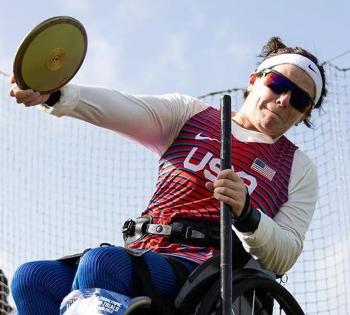
Cassie S. Mitchell, Ph.D., is an Associate Professor of Biomedical Engineering at Georgia Tech and Emory University. She directs the Laboratory for Pathology Dynamics, where her team advances interpretable artificial intelligence and machine learning to understand complex and neurodegenerative disease. By integrating knowledge graphs, multimodal biomedical data, and dynamic modeling, she develops scalable computational frameworks that bridge engineering, computation, and clinical science. She is also affiliated with Georgia Tech’s programs in Machine Learning and Computational Science & Engineering. A four-time Paralympian and Team USA medalist, she brings leadership and advocacy experience to her academic and public engagement efforts.
Education
- Ph.D. in Biomedical Engineering, Georgia Institute of Technology and Emory University School of Medicine
- B.S. in Chemical Engineering, Oklahoma State University
Affiliated Centers & Institutes
Research Interests
My research focuses on developing interpretable artificial intelligence and machine learning frameworks to model complex disease as dynamic, interconnected systems. Rather than treating disease as static diagnostic categories, my lab integrates knowledge graphs, biomedical natural language processing, multimodal data, and systems engineering principles to uncover mechanisms of disease progression and therapeutic response.
While much of this work centers on multifactorial and neurodegenerative disease, the underlying methods are designed to be generalizable across heterogeneous biomedical domains and scalable to diverse clinical contexts. By bridging literature-scale discovery with patient-level data, we build scalable, reproducible computational architectures that advance predictive and translational medicine.
Teaching Interests
Through courses such as Clinical Neurology, Translational Neuroengineering, and Bioengineering Statistics, I emphasize foundational engineering principles, statistical reasoning, and interpretable machine learning as tools for understanding complex disease. I am committed to equipping students with both technical depth and translational insight, preparing them to bridge engineering, computation, and clinical science.