Title

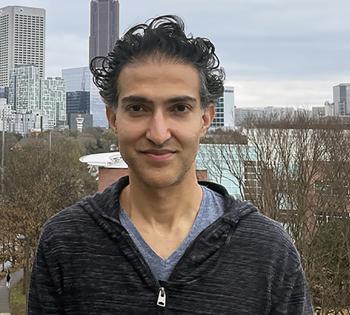
Bilal Haider

Headshot Placeholder
Photo of Bilal Haider in laboratory
Title/Position
Associate Professor, Gellerstedt Term Professor
Areas of Research
Contact

Contact

U.A. Whitaker, Suite 3104Georgia Tech
404.385.4935
Biography

Biography

Bilal Haider’s research goal is to measure, manipulate, and decipher neural circuit activity underlying visual perception and visual attention. He received B.S. and M.S. degrees from the University of Illinois Urbana-Champaign, M. Phil. and Ph.D. degrees from Yale University, and postdoctoral training at University College London. His lab uses advanced electrical, optical, and behavioral technologies to reveal insights into the inner workings of the brain in real-time and with unprecedented resolution. By discovering mechanisms of information processing in neural circuits, his research provides critical steps toward understanding impairments in many neurological disorders such as schizophrenia, epilepsy, and autism spectrum disorder. 

Education

Education

  • Ph.D. in Neurobiology, 2009 - Yale University
  • M.Phil. in Neurobiology, 2009 - Yale University
  • M.S. in Biology (Neurobiology), 2001 - University of Illinois Urbana-Champaign
  • B.S. in Cell & Structural Biology, 1999 - University of Illinois Urbana-Champaign
Research Interests

Research Interests

Dr. Haider's primary research interest is discovering neural circuit mechanisms and computations underlying visual perception.  This research uses a combination of high-resolution electrophysiological recording (both intracellular and extracellular), optogenetic manipulations, functional imaging, sophisticated behavioral tasks, and computational analysis to understand how cortical activity dynamics influence visual spatial perception and visual attention.  These studies have also laid groundwork to begin understanding how neural coding, neural oscillations, and cell-type specific activity may go awry during perceptual deficits in models of neurological disorders, such as autism spectrum disorder (ASD) and Parkinson's disease (PD). 
Teaching Interests

Teaching Interests

Dr. Haider has received classroom instruction, scientific mentorship, and research training of the highest caliber, and strives to do the same for lab members and students of all backgrounds and abilities. Dr. Haider's laboratory and classroom teaching philosophy has been informed by general scientific mentorship values that prioritize development of technical expertise, analytical rigor, conceptual clarity, and effective science communication. Dr. Haider teaches both undergraduate and graduate students, with topics spanning fundamental physiology, neurophysiology, advanced systems and computational neuroscience, and scientific research skills (problem definition and experimental design, data presentation skills, scientific writing).
Publications

Publications

Selected publications
1. Haider B, Häusser M, Carandini M. Inhibition dominates sensory responses in the awake cortex.
Nature, January 03, 2013; 493: 97-100.
2. Speed A, Del Rosario J, Mikail N, Haider B. Spatial attention enhances network, cellular and subthreshold responses in mouse visual cortex. Nature Communications, 2020 Jan 24;11(1):505.
3. Shin D, Peelman K, Lien AD, Del Rosario JP, Haider B. Narrowband gamma oscillations propagate and synchronize throughout the mouse thalamocortical visual system, Neuron, 111(7): 1076-1085.e8. April 5, 2023.
4. Del Rosario JP, Coletta S, Kim SH, Mobille Z, Peelman K, Williams BW, Otsuki AJ, Del Castillo Valerio A, Worden K, Blanpain LT, Lovell L, Choi H, Haider B. “Lateral inhibition in V1 controls neural and perceptual contrast sensitivity,” Nature Neuroscience, Accepted Jan 6, 2025.
5. Peelman K, Haider B. “Environmental context influences visual processing in thalamus,” Current Biology, Accepted Jan 17, 2025.
6. Del Rosario J, Speed A, Arrowood H, Motz C, Pardue M, Haider B. Diminished Cortical Excitation and Elevated Inhibition During Perceptual Impairments in a Mouse Model of Autism. Cereb Cortex. 2021 Jun 10;31(7):3462-3474.

Featured In