Annabelle C Singer

Biography
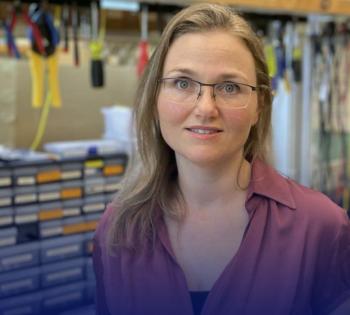
Dr. Annabelle Singer is the McCamish Foundation Early Career Professor in the Coulter Department of Biomedical Engineering at Georgia Tech and Emory University. Her research seeks to understand how neural activity produces memories and regulates brain immune function, with the goal of developing new therapies for brain disease. Dr. Singer’s work has shown that coordinated electrical activity across hippocampal neurons encodes memories and fails in models of Alzheimer’s disease. She discovered that driving specific patterns of neural activity, such as gamma oscillations, reduces Alzheimer’s pathology and alters brain immune function. Using non-invasive sensory stimulation, she is translating these discoveries from rodents to humans to pioneer radically new treatments for disease.
Dr. Singer is a Packard Fellow, Kavli Fellow, and recipient of the National Academy of Engineering’s Gilbreth Lectureship, the Society for Neuroscience’s Janett Rosenberg Trubatch Career Development Award, and the American Neurological Association’s Derek Denny-Brown Young Neurological Scholar Award. Her discoveries have inspired more than 20 clinical trials of brain stimulation across multiple diseases and have been featured on PBS, Nature News, Quanta Magazine, The New York Times, Radiolab, and multiple documentaries. Dr. Singer trained as a postdoctoral fellow in Ed Boyden’s Synthetic Neurobiology Group at MIT and earned her Ph.D. in Neuroscience at UCSF.
Education
- PhD in Neuroscience, University of California, San Francisco
- Bachelor of Arts, Wesleyan University
Research Interests
The central goal of Dr. Singer’s research program is to understand how neural activity produces memories and spurs the brain’s immune system. Dr. Singer’s research integrates innovative behavioral, electrophysiological, and computational methods to identify and restore failures in neural activity that lead to memory impairment. Dr. Singer has established and continues to develop a new therapeutic approach to Alzheimer’s disease, novel forms of non-invasive stimulation, and new ways to manipulate the brain’s immune system. Additionally, using non-invasive approaches, she is translating her discoveries from rodents to develop radically new ways to treat diseases that affect memory in humans.